

Cat kneading and purring usually means your cat feels safe, relaxed, and content in your company. The pairing traces back to kittenhood, when nursing kittens knead their mother’s belly to stimulate milk flow while purring to signal that all is well. Adult cats carry this soothing ritual with them for life, often reserving it for their favorite people, blankets, and laps.
That said, purring and kneading don’t always carry the same message. Cats also purr when they feel stressed or unwell, and repetitive kneading can sometimes point to anxiety or discomfort. At Advanced Pet Care of Clear Lake in Webster, TX, we often talk with cat owners who want to understand what their pet is trying to tell them. In this guide, we’ll explore the science behind cat kneading and purring, what it means when they happen together, and the signs that suggest something more is going on.
Why Cats Purr
Cats purr to communicate, and the reason behind the sound depends heavily on the situation and your cat’s body language.
How Purring Works
Purring happens when the muscles of the larynx rapidly twitch, causing the vocal cords to separate and vibrate as your cat breathes in and out. Most domestic cats purr at a frequency between roughly 25 and 150 hertz. Kittens begin purring within the first few days of life, which helps their mother locate them and confirms they’re nursing comfortably.
Interestingly, not every feline can purr. Small wild cats like bobcats and cougars purr much like house cats, while big cats such as lions and tigers roar instead. Because purring continues during both inhaling and exhaling, a contented cat can rumble for long stretches without pausing, which is why so many owners find the sound calming during cat kneading and purring sessions on the couch.
The Many Meanings of a Purr
Contentment is the most familiar reason, but it’s far from the only one. Researchers have identified several situations that prompt this low, rumbling sound:
- Relaxing in a warm, familiar spot or being gently petted
- Requesting food, which often comes with a higher-pitched “solicitation purr” that’s hard for owners to ignore
- Calming themselves during a stressful event, such as a car ride or a trip to the vet
- Coping with pain, illness, or injury
- Bonding with a mother, littermates, or trusted humans
Some scientists have also proposed that purring frequencies may support bone and tissue healing, although this idea still needs more research. What we know for certain is that a purr alone doesn’t confirm a happy cat. Reading the whole picture, including posture, appetite, and energy level, gives you a much clearer sense of how your pet actually feels.
Over time, you’ll likely learn to recognize your own cat’s range of purrs. A soft, steady hum during a nap sounds quite different from an insistent purr at the food bowl at six in the morning. Noticing those differences makes it easier to spot when something feels off.
Why Cats Knead
Kneading is an instinctive behavior that begins in kittenhood and continues into adulthood for comfort, communication, and territory marking.
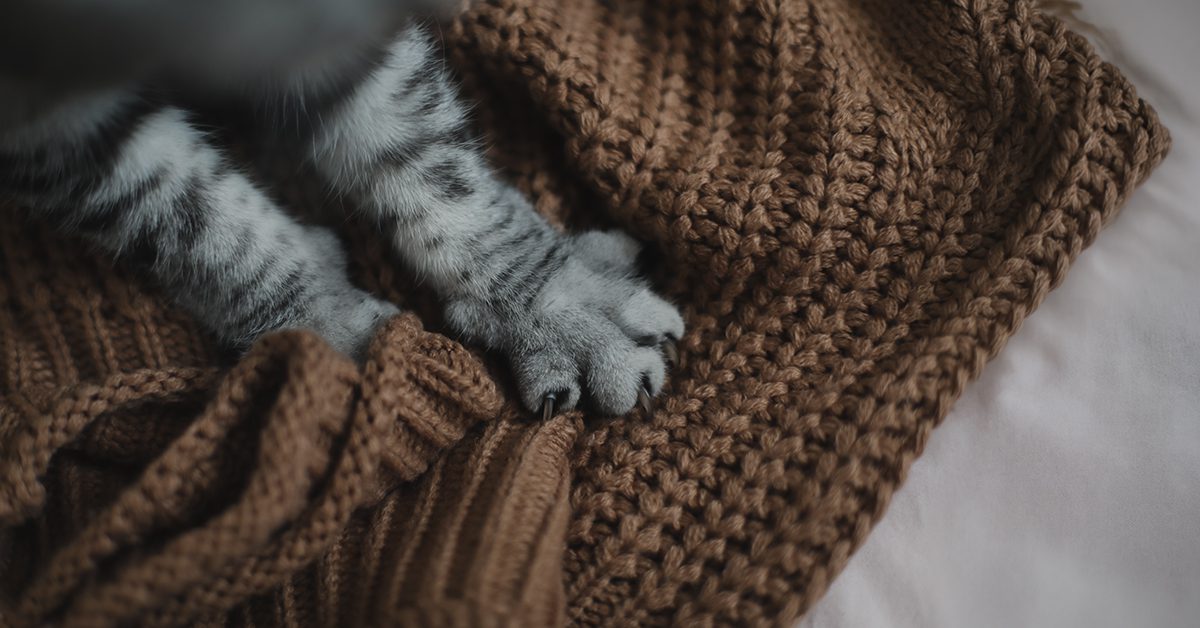
Often called “making biscuits,” kneading involves a cat pushing its front paws in and out against a soft surface in a rhythmic motion. Some cats extend their claws as they knead, while others keep them tucked away. Many cats also use their back paws, and a few drool or close their eyes while they work.
Common Reasons Behind the Behavior
Feline behavior experts point to several explanations for kneading:
- Comfort and nostalgia: The motion recreates the security cats felt while nursing as kittens.
- Scent marking: Glands in the paw pads release scent, letting your cat claim you or a favorite blanket as its own.
- Nesting: Wild ancestors patted down grass and leaves to create a safe, comfortable resting spot.
- Stretching: Kneading helps loosen muscles, especially after a long nap.
- Heat cycles: Unspayed females may knead more often when they’re in heat.
Like cat kneading and purring together, kneading on its own is completely normal, and most cats do it at least occasionally throughout their lives. Cats weaned early or separated from their mothers too soon may knead more often, but frequent kneading doesn’t automatically indicate a problem. Because kneading is so closely tied to purring, many owners first notice cat kneading and purring as a pair when their pet settles in for a nap. If those claws are making lap time uncomfortable, a thick blanket across your legs can protect your skin while still letting your cat enjoy the ritual. Regular nail trims can help too, and our team is happy to show you how to handle them comfortably during your cat’s next visit.
Avoid scolding or pushing your cat away mid-knead. Since the behavior is rooted in comfort and trust, gently redirecting your pet to a soft blanket or cat bed works far better than discouraging it altogether.
What Does It Mean When a Cat Kneads and Purrs at the Same Time?
When the two behaviors happen together, cat kneading and purring is generally one of the strongest signs of affection and trust a cat can show.
Think of it as your cat returning to the feeling of being a well-fed, protected kitten curled up beside its mother. By choosing your lap for that ritual, your cat is essentially telling you that you represent safety. Many owners notice that cat kneading and purring happens most often at bedtime, during quiet evenings on the couch, or right after they come home.
Reading the Rest of the Body
Combining these cues with your cat’s overall body language helps you confirm the message. A relaxed cat typically shows half-closed or slowly blinking eyes, a loose tail, forward-facing ears, and soft whiskers. Some cats drool slightly while kneading, which is a common and usually harmless sign of deep relaxation.
On the other hand, cat kneading and purring paired with flattened ears, a twitching tail, or a tense posture tells a different story. In those moments, your cat may be using the familiar ritual to soothe itself rather than to express happiness. Paying attention to the context, such as a recent move, a new pet, or a change in routine, can help explain why the behavior shows up.
When Cat Kneading and Purring Might Be a Problem
Cat kneading and purring is rarely a cause for concern on its own, but changes in frequency, intensity, or accompanying behavior can signal stress, pain, or illness.
Signs That Warrant a Closer Look
Cats are skilled at hiding discomfort, so cat kneading and purring can easily mask a problem. Contact your veterinarian if you notice any of the following alongside purring or kneading:
- Purring while hiding, refusing food, or avoiding interaction
- Kneading that becomes compulsive, especially if paired with sucking or chewing on fabric
- Labored breathing, open-mouth breathing, or purring that sounds raspy or unusual
- Reluctance to jump, limping, or sensitivity when touched in certain areas
- Changes in litter box habits, weight, or grooming
- Sudden aggression or irritability during petting sessions that were once enjoyable
Stress and Anxiety
Some cats show increased cat kneading and purring during periods of change, such as moving to a new home, welcoming a baby, or adding another pet. Compulsive kneading or fabric sucking may point to anxiety, particularly in cats weaned too early. Your veterinarian can help rule out medical causes and suggest ways to reduce stress in your home.
If something about your cat’s behavior doesn’t seem right, call Advanced Pet Care of Clear Lake at (281) 486-1509 to schedule an exam. Our team can look for underlying health issues and help you understand what your cat is trying to communicate.
Understanding Your Cat Better With Help From Our Webster, TX Team
For most pets, cat kneading and purring is a heartwarming sign of trust. Learning to read the full context, from body language to recent changes at home, helps you tell the difference between a cat that is purely content and one that is quietly asking for help.
The veterinarians at Advanced Pet Care of Clear Lake support cat owners throughout Webster, Clear Lake, League City, Seabrook, and nearby communities with wellness exams, behavior guidance, and compassionate care. If you have questions about your cat kneading and purring, or if a familiar habit has suddenly changed, we’re happy to help you find answers. Call (281) 486-1509 to book a visit for your feline friend.
About Us
Advanced Pet Care of Clear Lake is a full-service veterinary hospital in Webster, TX, offering advanced diagnostics, surgery, dental care, and boarding for pets, including exotics.