

Can cats drink milk? Most adult cats should not. While milk often appears harmless and familiar, dairy commonly causes digestive upset in cats due to lactose intolerance. This reality surprises many pet owners who grew up seeing cats happily lap from a saucer. Understanding why this myth persists and how milk actually affects feline digestion helps pet owners make informed, confident choices.
Milk has long been linked with cats in books, cartoons, and advertising. Yet veterinary science continues to show that the question “Can cats drink milk?” deserves a far more thoughtful answer. At Advanced Pet Care of Clear Lake in Webster, TX, we frequently discuss nutrition questions with local pet owners who want clarity without confusion. Let’s take a closer look at the relationship between cats and dairy and what it means for your cat’s everyday health. If you have questions about nutrition, digestion, or dietary concerns, call (281) 486-1509 or book an appointment online with our team.
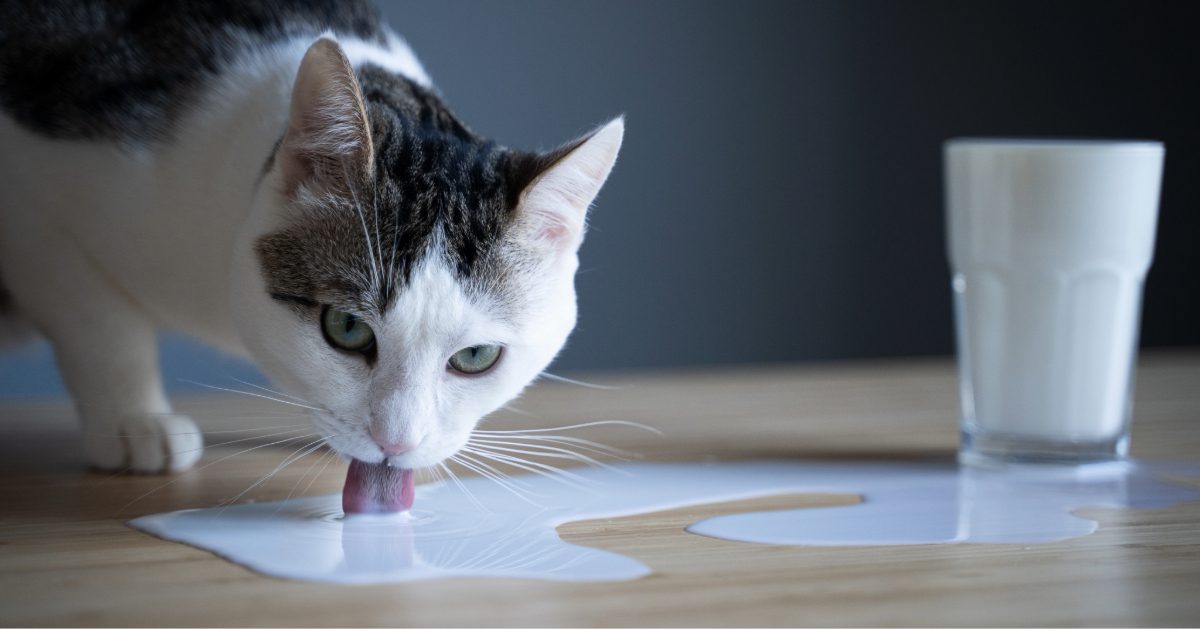
Is Milk Good for Cats?
When people ask, “Can cats drink milk?”, they often assume milk offers hydration, calcium, or comfort. In reality, milk provides little nutritional benefit for adult cats and often creates digestive stress. While kittens rely on their mother’s milk for early development, adult cats no longer process dairy the same way. Their digestive systems change after weaning, which alters how their bodies handle lactose.
Milk contains lactose, a sugar that requires a specific enzyme to digest. As cats mature, their bodies reduce production of this enzyme. As a result, even a small amount of milk can cause gastrointestinal discomfort. That discomfort often appears as loose stools, bloating, or gas. This reaction explains why veterinarians frequently caution pet owners when they ask if milk belongs in a cat’s diet.
Nostalgia Versus Nutrition
It is also important to recognize that asking if cats can drink milk goes beyond safety. Even when milk does not cause visible digestive upset, it still adds unnecessary calories and sugar to a diet that already meets nutritional needs through balanced cat food. Milk does not improve coat quality, hydration, or energy levels. Instead, it may quietly interfere with digestion over time. Key reasons milk is not ideal for cats include:
- Limited digestive tolerance for lactose
- No essential nutrients that cats cannot obtain from proper cat food
- Potential contribution to weight gain
- Increased risk of gastrointestinal upset
For these reasons, veterinarians consistently answer the question “Can cats drink milk?” with caution rather than encouragement.
Is Your Cat Lactose Intolerant?
Many pet owners discover lactose intolerance only after their cat experiences digestive issues. When people ask, “Can cats drink milk?”, lactose intolerance becomes the central concern. Most adult cats lack sufficient lactase, the enzyme needed to break down lactose. Without it, lactose passes into the intestines undigested, leading to irritation and discomfort.
Signs of Lactose Intolerance
Lactose intolerance is not a disease. It is a normal biological change that occurs after kittens transition away from their mother’s milk. While some cats tolerate tiny amounts of dairy better than others, tolerance does not equal benefit. The question “Can cats drink milk?” still centers on whether it supports overall health, not whether a cat can tolerate it temporarily. Signs commonly associated with lactose intolerance may include:
- Loose or watery stool
- Increased gas
- Abdominal discomfort
- Occasional vomiting
These symptoms may appear within hours of milk consumption. Because reactions vary, some pet owners mistakenly believe their cat is unaffected. However, repeated exposure can still create ongoing digestive stress. That is why veterinarians consistently advise that the safest answer to whether cats can drink milk is usually no.
Why the Myth Still Exists
The belief that cats love milk persists because of cultural imagery and early childhood exposure. Many kittens do drink milk naturally from their mother, which reinforces the association. However, adult digestion does not mirror kitten digestion. When people ask, “Can cats drink milk?”, they often rely on memory instead of biology. Modern veterinary nutrition replaces myth with evidence.
Can Cats Drink Milk Alternatives?
As dairy awareness increases, many pet owners now ask whether alternatives change the answer to “Can cats drink milk?”. Options such as lactose-free milk, almond milk, oat milk, and soy milk appear safer on the surface. Yet most milk alternatives still fail to provide meaningful nutritional value for cats.
Plant-based milks often contain oils, sugars, flavorings, and additives that cats do not require. Even lactose-free dairy still introduces fat and calories that serve no essential role in feline nutrition. While some alternatives may cause fewer digestive issues, the question of whether cats can drink milk still remains centered on whether milk adds value. In most cases, it does not.
Do Alternatives Add Value?
Cats also do not require dietary variety in the way humans do. Their digestive systems thrive on consistency. Introducing new liquids for novelty increases the chance of digestive upset. This is why veterinarians continue to emphasize that water and nutritionally balanced cat food remain the foundation of feline hydration and nutrition. When evaluating milk alternatives, consider these points:
- They do not improve hydration beyond water
- They do not replace essential nutrients
- They may contain unnecessary ingredients
- They may encourage picky eating habits
Even with alternatives available, the answer to whether cats can drink milk remains largely unchanged.
Can Kittens Have Milk?
The question “Can cats drink milk?” takes a different tone when discussing kittens. Kittens naturally depend on their mother’s milk during early development. That milk contains a specific nutritional balance tailored to feline growth. However, cow’s milk is not the same as feline milk, and it does not offer the same digestibility or nutrient profile.
Digestive Changes as Kittens Grow
Once kittens begin transitioning to solid food, their digestive systems adapt. Over time, their ability to process lactose decreases. This means that even young cats gradually lose the ability to handle dairy effectively. When pet owners ask can cats drink milk for kittens, the answer depends on age, diet, and digestive development.
Why Cow’s Milk Is Not a Replacement
Milk from other species does not match feline nutritional needs. That mismatch explains why veterinary guidance consistently discourages offering cow’s milk as a regular drink for kittens. As kittens mature, the risks of digestive upset increase rather than decrease.
Growth Needs Versus Comfort Myths
Kittens grow rapidly and require precise nutritional balance. Milk from a bowl may appear comforting, but it does not support long-term development. When people ask “Can cats drink milk for kittens?”, the safest perspective focuses on nutrition rather than nostalgia. Balanced kitten diets deliver what growing bodies truly require.
What Can Cats Drink Instead of Milk?
If the answer to whether cats can drink milk is usually no, many pet owners ask what they should offer instead. The simplest and healthiest option remains fresh, clean water. Cats may not always appear enthusiastic about water, but hydration plays a key role in kidney health, urinary function, and digestion.
Some cats prefer moving water sources, such as fountains, which encourage increased intake. Others benefit from wet food that contributes additional moisture to daily nutrition. These approaches support hydration without introducing unnecessary sugars or fats. Healthy hydration options for cats include:
- Fresh water changed daily
- Flowing water fountains
- Moisture-rich canned food
- Consistent feeding schedules
Rather than focusing on the question “Can cats drink milk?”, shifting attention toward hydration quality provides greater long-term benefit. Milk often distracts from this more important nutritional goal.
Why Simplicity Works Best
Cats evolved to obtain hydration from prey and clean water sources. Their bodies do not require flavored or sweetened liquids. When evaluating whether cats can drink milk, the simplest answer aligns with biology. Water remains the gold standard.
Why Veterinary Guidance Matters
Pet nutrition questions often start with curiosity but deserve professional clarity. When pet owners ask, “Can cats drink milk?”, they usually want reassurance rather than rules. Veterinary teams focus on long-term health, digestive comfort, and nutritional balance. Milk rarely supports those goals.
At Advanced Pet Care of Clear Lake in Webster, TX, our team regularly helps families navigate everyday nutrition questions with confidence. Whether your cat shows digestive sensitivity or simply turns away from water, we can help you understand what supports healthy hydration and digestion for your cat’s unique needs.
Milk may seem harmless, but science shows why it often causes more problems than benefits. Understanding the answer to “Can cats drink milk?” empowers pet owners to make decisions grounded in biology rather than tradition.
So, Can Cats Drink Milk or Not?
So, can cats drink milk? Most adult cats should not. Milk offers little nutritional value, frequently causes digestive upset, and does not support long-term wellness. While the image of a cat with a saucer of milk remains familiar, modern veterinary knowledge paints a very different picture.
Choosing water, moisture-rich diets, and veterinary guidance creates a healthier foundation for your cat’s daily routine. If you have questions about your cat’s digestion, hydration habits, or diet, our team at Advanced Pet Care of Clear Lake is ready to help.
Call (281) 486-1509 or book an appointment online to speak with a caring veterinary professional who understands your cat’s nutritional needs. Your cat depends on you for informed choices. Knowing the truth behind the question “Can cats drink milk?” helps you provide the care your cat deserves.
About Us
Advanced Pet Care of Clear Lake is a full-service veterinary hospital in Webster, TX, offering advanced diagnostics, surgery, dental care, and boarding for pets, including exotics.