

A dog eating grass and vomiting is usually a minor, short-lived event rather than a sign of serious illness. Most dogs nibble grass out of instinct, boredom, or simple enjoyment, and research suggests only about one in four dogs actually throws up afterward. Still, when the pattern becomes frequent or shows up alongside other symptoms, it can point to nausea, a digestive problem, or a diet that isn’t meeting your pet’s needs.
At Advanced Pet Care of Clear Lake in Webster, TX, we hear questions about this habit from pet owners all across the Bay Area. Some worry their pup swallowed something toxic, while others wonder if grass is a remedy their dog figured out on its own. The truth sits somewhere in the middle. Below, we explain what causes a dog eating grass and vomiting, when it deserves attention, whether lawn grass is safe, and how to discourage the behavior for good.
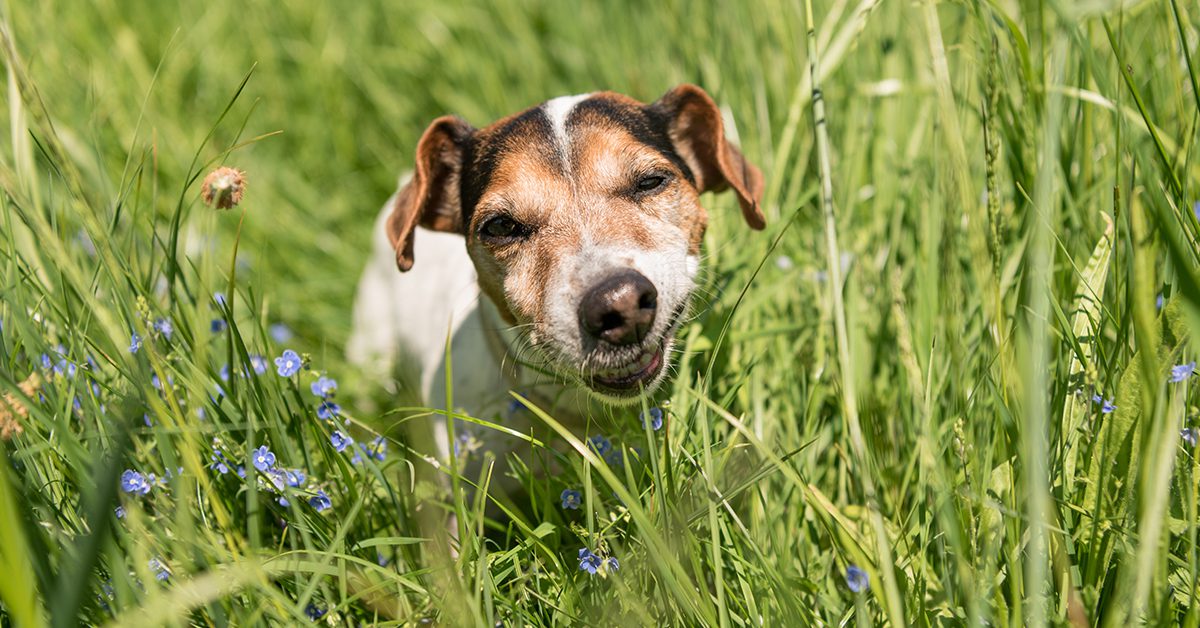
Why Do Dogs Eat Grass?
Dogs eat grass for a mix of instinctive, behavioral, and physical reasons, and most of them are harmless.
A widely cited survey from the University of California, Davis found that roughly two-thirds of dogs eat plants daily or weekly. Fewer than one in ten showed any signs of illness beforehand. That finding challenges the popular belief that every dog eating grass and vomiting is trying to cure an upset stomach.
An Instinct Inherited From Wild Ancestors
Wolves and other wild canines regularly consume plant material, both directly and through the stomach contents of their prey. Researchers believe this grazing may have helped wild canids clear intestinal parasites by adding roughage to the gut. Your couch-loving retriever may carry the same urge, even though modern diets and parasite prevention make it far less necessary.
Boredom, Stress, and Attention-Seeking
Young, energetic dogs often chew grass simply because they have nothing better to do. Others graze when they feel anxious or notice that the behavior earns a reaction from their owner. If your dog seems to munch more on days with fewer walks or less playtime, boredom may be the main driver.
Common reasons dogs reach for the lawn include:
- Enjoying the texture or taste of fresh, tender blades, especially in spring
- Seeking extra roughage when their regular food is low in fiber
- Relieving mild stomach discomfort, although this applies to a minority of dogs
- Exploring the yard with their mouth, which is common in puppies
- Responding to the scent of other animals that have passed through the area
In many cases, grazing is simply a normal part of how dogs interact with the world around them. Grazing alone rarely causes trouble, but a dog eating grass and vomiting often, or showing other changes, is a different story.
Is My Dog Sick if They Eat Grass and Vomit?
Not necessarily, since an occasional episode of a dog eating grass and vomiting is often harmless, but frequent or severe vomiting can signal an underlying health problem.
When One Episode Isn’t a Cause for Alarm
Long grass blades can tickle the throat and stomach lining, which may trigger vomiting on their own. If your dog throws up once, brings up mostly grass and foam, and then goes back to eating, drinking, and playing normally, the event is typically minor. Many owners notice an otherwise healthy dog eating grass and vomiting a few times a year with no lasting effects.
Signs That Point to Something More Serious
The context around the vomiting matters more than the grass itself. A dog who suddenly starts grazing frantically, particularly after a period of no interest, may be feeling genuinely nauseated. Gastrointestinal conditions such as gastritis, inflammatory bowel disease, pancreatitis, food sensitivities, or a swallowed foreign object can all lead to repeated episodes.
Contact your veterinarian promptly if you notice any of the following:
- Vomiting more than once or twice in a single day
- Blood, coffee-ground material, or bright yellow bile in the vomit
- Lethargy, weakness, or reluctance to move
- Loss of appetite lasting longer than a day
- Diarrhea, black or tarry stool, or straining to defecate
- A swollen, firm, or painful belly
- Unproductive retching, which can indicate bloat, a life-threatening emergency
If your dog shows any of these warning signs, call Advanced Pet Care of Clear Lake at (281) 486-1509 so our team can determine whether your pet needs to be seen right away. When you call, note how often your dog has vomited, what the vomit looked like, and whether your pet may have gotten into anything unusual. These details help our veterinarians narrow down the cause quickly.
Can Dogs Eat Grass Safely?
Plain, untreated grass is generally not toxic to dogs, but the lawn itself can hide hazards that make grazing risky.
Hidden Dangers in the Yard and at the Park
The grass your dog chews at a neighborhood park or along a sidewalk may have been sprayed with chemicals you can’t see. In the Houston area, our warm, humid climate also encourages plants and pests that can cause problems for curious grazers. Even when a dog eating grass and vomiting seems like a minor issue, the spot where it chooses to snack can create bigger problems.
Watch for these common lawn-related risks:
- Herbicides, pesticides, and fertilizers applied to public or private lawns
- Intestinal parasites such as roundworms and hookworms, which spread through soil contaminated by animal feces
- Toxic landscape plants mixed into grassy areas, including sago palms, oleander, and azaleas
- Grass awns and foxtails, whose barbed seed heads can lodge in the mouth, nose, or throat
- Mushrooms that sprout in damp yards after Gulf Coast rainstorms
Does Grass Eating Signal a Diet Deficiency?
Some pet owners suspect a dog eating grass and vomiting is missing something in its food. A well-known case report described a poodle who stopped grazing after switching to a higher-fiber diet, which suggests fiber may play a role for certain dogs. However, there isn’t strong evidence that most dogs graze because of a true nutritional deficiency. Dogs on complete, balanced commercial diets eat grass too.
If you wonder whether your pet’s food is part of the problem, talk with your veterinarian before making any changes. A sudden diet switch can upset the stomach on its own, and your vet can recommend an approach that suits your dog’s age, breed, and health history.
How to Stop a Dog From Eating Grass and Throwing Up
The most effective way to stop a dog eating grass and vomiting is to rule out medical causes first and then address the behavior with supervision, training, and enrichment.
Start With a Veterinary Exam
Before you treat a dog eating grass and vomiting as a purely behavioral issue, schedule a visit with your veterinarian. A physical exam, fecal test, and sometimes bloodwork or imaging can reveal parasites, digestive disease, or other issues driving the behavior. Once those possibilities are ruled out, you can focus on training with confidence that you aren’t missing a hidden health concern.
Redirect the Urge to Graze
Keeping your dog on a leash during walks gives you control over where your pet sniffs and snacks. Teaching a reliable “leave it” cue, paired with praise and a favorite treat, helps your dog learn that ignoring the lawn pays off. Consistency matters, so practice the cue in short sessions every day, starting in low-distraction areas before moving to busier spots.
Boredom-driven grazing often fades once a dog gets enough physical and mental exercise. Longer walks, games of fetch, food puzzles, and snuffle mats give curious noses and busy mouths something productive to do. Dogs who spend long stretches alone in the yard may benefit from shorter supervised outdoor sessions and more interactive time indoors.
Make the Yard Less Tempting
Take a look around your own property for plants or treated areas that might attract or harm your pet. Choosing pet-safe landscaping, removing toxic plants, and picking up after your dog promptly all reduce the risks associated with grazing. If you use lawn treatments, ask your landscaper about pet-friendly products and follow the recommended waiting period before letting your dog back outside.
Patience goes a long way here. Many dogs reduce or stop grazing within a few weeks once their environment and routine change, and your veterinary team can help you adjust the plan if progress stalls.
Get Answers About Your Grazing Dog in Webster, TX
A dog eating grass and vomiting doesn’t always need medical care, but frequent episodes deserve a professional opinion. Understanding the difference between harmless grazing and a sign of illness helps you act quickly when it counts and relax when it doesn’t.
The team at Advanced Pet Care of Clear Lake is here to help pet owners in Webster, Clear Lake, League City, and the surrounding communities sort out what’s normal and what isn’t. Our veterinarians can examine your dog, look for underlying causes, and build a practical plan that fits your pet’s lifestyle. If a dog eating grass and vomiting has become a regular sight in your home, or if your dog seems unwell after eating it, call us at (281) 486-1509 to schedule an appointment. We look forward to helping your dog feel its best, both on the lawn and off.
About Us
Advanced Pet Care of Clear Lake is a full-service veterinary hospital in Webster, TX, offering advanced diagnostics, surgery, dental care, and boarding for pets, including exotics.